

Plant downtime and excessive power bills are two major pain points troubling industrial facility operators. Right selection of Electric Motors directly influences production stability and overall profitability. In today’s competitive market full of various Power Motors, purchasers need to distinguish genuine Energy Saving Motors from over‑hyped products, and identify truly Reliable Motors that can withstand long‑term tough‑environment operation. YE5 Series High Efficiency Three Phase Induction Motor accumulates abundant field‑operation data across multiple global industries, offering practical reference for procurement specialists and engineering teams.
Many buyers misunderstand that high‑efficiency motors only bring value on paper. Real‑world operation data tells a different story. YE5 series adopts multi‑physics joint simulation design, optimizing fan structure and internal heat dissipation channel. It suppresses electromagnetic vibration and noise while lowering ventilation loss, solving a common defect of some high‑efficiency competitors: efficiency promotion accompanied by obvious noise and temperature rise during long‑time running湘电集团. Its modular structural design reserves sensor installation interfaces, supporting temperature and vibration remote monitoring for smart factory transformation, which is a practical advantage absent from many conventional Electric Motors.
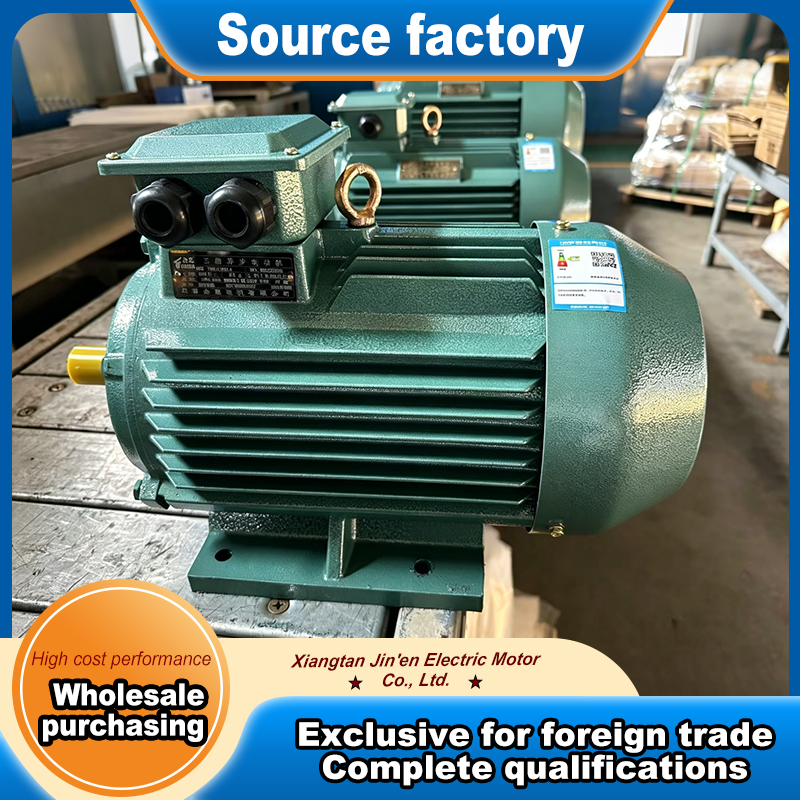
Side‑by‑side practical comparison reveals hidden gaps among similar‑specification motors. When comparing YE5, YE4 and ordinary IE3 motors under actual site conditions, not only nameplate efficiency should be reviewed, but also temperature rise under continuous partial‑load, anti‑overload capacity, noise level and component durability. IE3 motors enjoy low procurement cost, yet they generate higher heat accumulation under long‑time partial‑load, leading to insulation aging speed‑up and more frequent maintenance. YE4 performs well in general‑scenario energy‑saving renovation, but its performance declines more obviously under heavy‑load impact. YE5 Energy Saving Motors maintain low temperature‑rise output under fluctuating load, and its enhanced mechanical structure strengthens anti‑shock capability. For cement plants, sewage treatment bases and mineral processing sites with frequent load fluctuation, YE5 shows outstanding advantages as Reliable Motors, cutting unexpected shutdown risks caused by motor overheating or mechanical damage.
Here are targeted procurement suggestions based on real‑world project experience. First, do not select motors merely by rated power value. Over‑sizing is a widespread mistake in motor procurement: oversized motors work under ultra‑low load rate, and even top‑tier Energy Saving Motors cannot reach expected energy‑saving effect. Calculate real‑site load data and select YE5 model matching actual working load. Second, pay attention to matching with peripheral components. YE5 series adapts well to VFD variable‑frequency drive systems, yet users should configure matched insulating bearings when running under variable‑frequency conditions to extend service life. Third, differentiate application scenarios: for clean‑indoor light‑load equipment, standard YE5 configurations satisfy demands; for damp, dusty or corrosive workshops, select enhanced anti‑corrosion surface treatment options. Fourth, evaluate suppliers from multiple dimensions: apart from product quotation, examine batch‑testing capability, component traceability and global logistics cycle. Many low‑cost counterfeit Power Motors cut material standards to lower prices, which will trigger heavy loss in later‑stage operation.
Against the backdrop of global energy‑price volatility, enterprises cannot regard motor procurement as simple component purchasing. YE5 Series High Efficiency Three Phase Induction Motor proves that qualified Electric Motors integrate energy‑saving performance, mechanical stability and full‑lifecycle economic benefits. For new‑project construction and old‑equipment energy‑saving transformation, end‑users should combine site working‑condition data, carry out comprehensive comparison rather than focusing only on unit price, to pick out proper Reliable Motors and Energy Saving Motors for long‑term production operation.